Two days ago I found myself in the back of a BMW on a 3 hour drive to Agra, the city that plays home to the Taj Mahal. It was the former capital of India, and is significantly smaller and more rural then Delhi.
We left at 6am from the hotel, passing through the rarely uncongested roads of Delhi, across the river and South. Despite being a rainy day, the sun still brought the city to life around me as we drove away from chaos, into rural India. Farmland suddenly surrounded the car. If it weren’t for the dark skinned people, and driving on the left side of the road, I would have easily thought I was back in the Midwest.
The entire drive – 2 hours total – I spent wishing I could rent a bike and just go for hours on the back roads where women carried crops on their head, and men hoed their fields by hand.
Its something we don’t see anymore in the States. In fact, its something I’ve never seen in my lifetime.
The worst contradiction is that I was comfortable in my car, driving down the new “Expressway” that just opened 20 days prior. It cuts the travel time between Delhi and Agra down to 2 hours, from 5 – at least for those who can afford the high 400 rupee taxes.
This contradiction seems to be the theme of my time in India. Luxury vs. poverty.
Only once before have I seen such stark contrast between the poorest in a nation, and the most wealthy – in Cape Town. There, similar to here in Delhi, the homeless live just around the corner from million dollar houses, home to the rich and famous of each place. I remember 3 years ago when I first saw such a contrast, I couldn’t believe it.
Now, I’m older and wiser, and instead of worrying, I have come to accept it as part of our world. There are the wealthy, and there are the poor. It doesn’t mean that this can’t change, or that I’m encouraging a communist world where everyone shares everything. It just simply means that our world isn’t perfect.
Yet.
We’ve still got a lot of work to do.
]]>Everything looks beautiful in the sunrise. People, buildings, and even the dirty old streets of Delhi just glow in the golden hues that the morning sun brings. Few people are bustling about, setting up their stands in the streets, waiting for the bus, or just sitting and enjoying the start to their day.
Typically the buildings in Delhi are faded; formerly-bright signs have fallen pastel, dust settles on gray brick, and most of the cars are a worn gray or tan.
But in the morning, the sun brings life to all of these dull places.
Each of the gray buildings begins to look the most pure of gold. Women dress in their vibrant saris, and carry bushels of fresh fruit to be sold at market, bringing color to the streets to the tune of banana yellow, apple red, and mango green and orange.
It was during this time, the “golden hour” of the day, when I found my favorite part of Delhi.
Morning. Beautiful morning.
]]>
I have been very sick. Both physically, and emotionally, but thankfully it hasn’t stopped me from recognizing the beauty that this country holds.
As some know, I left my volunteer placement yesterday due to illness, and have been staying at a hotel downtown getting my body back to usual. Of course it sucked to leave, but it was the right thing to do. From here, I’ll see what I can of Delhi before I go back to the States on Sunday.
The truth is, of all of the places I have been, Delhi is by-far the most beautiful. The streets may be filled with trash, dirty water, and stray cows, but the people make this place truly amazing.
I got my first glimpse of the joys of India on my second day at the orphanage. I managed to make it downstairs to see the girls all dressed in their uniforms, all ready for a day at school. It had stormed that morning, so the corridors and open areas of the orphanage were filled with puddles. Despite being in their prim and proper white blouses and red-plaid skirts with knee high socks, each and every one was laughing, giggling and jumping from murky water puddle to puddle.
I couldn’t help but laugh along, and run to get my camera to capture the moment. Then of course I got the usual “take my picture! Take my picture!”.
Nothing brings joy to a child like taking their photo and showing it to them instantly on the small screen. And nothing brings joy to me like hearing them giggle and whisper to their friends about the image.
It is actually a feeling I’ve gotten addicted to over the years. Children giggling and asking for photo after photo.
Of course once school actually started, nearly all of the youngest girls were shivering in their wet shoes and socks, but they didn’t care. Rain is the simplest toy for kids. They even got Ellen, the other volunteer, and me out playing in it with them.
…
This joy that the girls shared is not limited within the walls of their adopted home. I have found that nearly everyone here is simply… happy.
Even the majority of people who are living in poverty, working day to day just to survive, sit by the side of the road laughing and smiling and just enjoying the simplicity of time.
My absolute favorite thing about being in Delhi is the reaction I have gotten from people, being a white girl with blonde hair and blue eyes. In my past experiences, driving through countries where I stand out, I have gotten nothing but vulgar comments from men and dirty looks from women.
In India, all I get is smiles. People are thrilled to see me! Its like they are so proud to be Indian and me coming to visit their country makes them even more proud. The men don’t say anything rude or inappropriate, but instead smile, say hello and ask how my day is going.
I admire India. It is beautiful and happy and simple. 3 things I could use more of in my life. Although I am leaving so much earlier then I had hoped, I’ve got 4 more days to soak up all of the happy. I couldn’t ask for anything more.
]]>
I have always prided myself in doing the adventurous thing, the cool fun out-there thing that will impress people.
The decision to spend 8 months traveling, by myself, was one of those “people will think this is great” decisions. On top of that, it had the bonus of me getting to see parts of the world that have always been on my bucket list. India being at the top.
Now that I’ve been here for the brief 2 days, the regret of taking on such a big task is sinking in. I’m scared. I really am truly scared. Being seemingly alone in a country of over a billion people is a terrifying feeling.
On top of that, the food makes me sick, the heat prevents me from sleeping, and my work is completely confusing and unstructured.
Not only am I working at an all-girls orphanage, but I live there as well. The volunteer room is hot – just like the rest of India – and the food they serve (despite being delicious) is so spicy that I can’t possibly eat it. Even if I could, I know my digestive system will have a hard time processing anything.
Subsequently, I am either starving or running to the bathroom. It’s the worlds worst dieting plan.
All in all, I am defeated. India has defeated me, physically, emotionally and mentally, all in a short 2 days.
Its embarrassing.
I’m so disappointed in myself.
The question that remains is, what now? Do I stay here, miserable and “tough it out?” because that’s the cool, adventurous thing to do?
Or is it ok to admit defeat, and move on? More then anything, I would like to find a hotel, get a good night’s sleep and some food, and head home. Home to Minnesota where I have my family and friends, and familiarity.
But what’s so adventurous about that?
Not to mention all the questions that then brings to mind…
Does this mean I’m a quitter?
What about my career as a travel photographer? If I can’t do 2 days in India, how the hell am I suppose to make a living off of photos of the foreign places that others don’t visit?
If I don’t do photography, what do I do?
It seems like my entire life depends on whether I “tough it out”
]]>I was picked up at the airport by a representative of my organization, and taken to a “hostel” where I was told I’d be spending the night. Orientation would be in the morning, but he didn’t know what time, or where.
Always helpful.
The combination of jet lag, missing my family, and unknown details about my next day, led to easily the worst night of my life. Throw in the heat and humidity of Delhi, and I had no idea what I was getting myself into.
The jet jag was the worst part. It can be incredibly dangerous, not just because of what it does to your body, but what it does to the most stable and happy of minds.
I scared myself with the thoughts I was having about life, traveling, my relationships, etc. I sat up for hours, tears streaming down my face basically confused about any reason why I would want to travel thousands of miles away to help people I didn’t know. I went back in forth on my own mind questioning the motives of my closest friends, family, and people that have always supported me.
More then anything, I questioned the point of life. I have never once struggled with depression, or anxiety, but after just a few hours of being alone and emotional, I had all but convinced myself there was no reason to continue living.
I hadn’t even been in Delhi for a full 10 hours, and it had broken me down. Physically, emotionally, and mentally.
Why am I here?
What’s the point?
I can’t leave, because everyone will think I’m a quitter.
If I can’t handle this, I’ll never amount to anything.
I’m useless.
I struggled to think of anything that could make me smile or laugh.
The day-to-day tasks of life overwhelmed my mind with their monotony and seemingly pointlessness.
It was terrifying.
So I called my dad. In a panic, I’ll admit. It was a last resort – I usually never reach out to people because I know they’ll just worry. (Or in my dad’s case, move heaven and earth to get me home where I am safe and happy).
He was able to settle me down, convincing me that a pb and j, and some sleep would make everything better, and I’d feel ok in the morning.
Of course he was right, but its still difficult being here. New places are always scary, but Delhi has its own way of bringing about feelings of anxiety and stress to a girl to hardly feels either.
We’ll see what the following days bring.
]]>However, there is this other thing about airports: they are the gateway to adventure. You never get on a flight hoping “man, I hope this trip is boring”, or “I sure hope I don’t learn anything new, or meet any cool people”. Boarding a flight is the simplest way that I’ve found to explore the world around you, try something new, and expand the perspective you have about everything – most importantly, yourself.
Right now, at 10:43pm in Minnesota, I find myself stuck between the two vices that airports present. I suffered through 2 tearful goodbyes with the Boyfriend, in both Billings and Denver – because one just wasn’t hard enough – and am just a few hours away from another farewell from Mom and Dad.
“There goes Kristen, leaving again. Who knows when we’ll see her again.”
But alas, adventure is out there, and I’ll be damned if I don’t find it. I’m 23, unemployed, with a backpacked filled with stuff and nearly my entire savings in camera equipment. I’ve got goals, and hopes, and curiosity to satisfy.
As of tomorrow, September 1st, I’ll be on a one-way flight to Dehli, India, spending 2 months working at a local orphanage, photographing kids, exploring the country, and living out my own “Eat. Pray. Love.” From there, I head Northwest to Nepal, and then continue to Southeast Asia to round out a total of 8 months of work and adventure.
I’m relatively sure I’ll come back a different girl then I left….and I’m positive I’ll have some excellent stories.
Stay tuned.
333KEC
]]>Celebration is everything in Peru. With Independence Day coming up, it is more important now then ever. However, as wonderful as celebrating can be, I’m seeing it interfere with other important things…such as the education of my students.
This week has been emotional when it comes to teaching in Pachecutec. Additional celebrations means less class time for teaching, but it also means getting to see my little Maricielo be the star of her class in the Independence Day production. Presentations and performances give me a taste of Peruvian culture that I’ve been missing, but it also takes away the next two weeks of classes that I have with my students…which means that today was my last day. What a terrible surprise. Despite being in Peru for another 3 weeks, I had to say goodbye to my students today and leave them with an uncertain teacher for after their “winter” break. I didn’t think it would be as hard as it was, however after a million hugs from every boy, and a billion kisses from all of my girls…I was feeling it.
The reality hit me though, as I headed out of class and towards the rest of the volunteers and found Maricielo waiting with them. I walk her home everyday after school, however I wasn’t planning on it today considering I finished 45 minutes later then usual. However, like the sweetheart that she is, she waited so patiently for my class to be over, sitting quietly next to the others who were running, playing, chatting, and being typical kids. She couldn’t have possibly known that I was still there, or that I was coming to walk her home at all, but she still waited.
I couldn’t help but burst into tears when I saw her little head perk up as I headed up the hill to where she was. Not only did she see me coming from a mile away, but she stood up and ran towards me, bursting with a smile, arms stretched, waiting for the hug that she knew I was dying to give her. If I had it my way, I would stay in that hug for years. I just couldn’t even believe that she waited for me. Couldn’t even believe it. In fact, I still can’t. My baby girl.
Goodbyes are so difficult. I feel like that is just a fact of life. People meet, make connections, and leave. When is that no longer the case? When people come into your life, make connections and stay? It must be an amazing thing. Clearly, my problem is a result of my inability to stay still, however at some point it has to be the case where that changes. Can’t people move with me? Could that person be Maricielo…?
No school for the next two weeks also means a full two weeks of working with Johan every day. I have such mixed feelings about this. Of course, I am thrilled. I love that little boy with all of my heart. He fell asleep in my arms on Monday, and I essentially refused to leave when the rest of the volunteers were ready. However, I am already bracing myself for how incredibly difficult it will be to say goodbye to him on the 8th. Right now I spend only 2 days a week with him…maybe 3 if I’m lucky. However, 5 days a week…5 days of hand holding, walking, running (yes, running…progress) and food spitting…its going to be impossible.
My parents may just have to embrace the idea of a Peruvian grandchild.
In class today, for my final lesson, I taught the kids all the words in English relating to love…“You are pretty”…”Will you be my girlfriend?”… and most importantly, “I love you”. Writing Te Amo on the board, and then asking if they new the translation was amazing. Without hesitation, my 4th graders yelled “love! Love!”. Of course it wasn’t perfect, but it melted my heart. They knew the word, and they knew the importance it has in life, and to me. We proceeded with boys asking girls on dates, girls telling boys they were cute, and finally ended with my star student inching his way to the front of the class and saying – loud enough for all to hear – “Miss, Miss Christine….you are pretty”.
My heart really didn’t stand a chance today. Not at all. It’s a good thing that love can counteract the pain of goodbyes.
]]>Progress is an amazing thing. It is the sole thing that keeps the world turning; on the global front when it comes to dealing with humanity, but also on the personal level. Today Johan walked all by himself. No hand-holding, no guiding, no wall for support. He got up off the ground, onto his unstable little feet, and walked. Amazing.
4 weeks ago when I first met Johan, this would have seemed impossible. Our first interaction involved a good portion of his lunch being spit onto my new Delta Gamma shirt. He was in a fit of rage due to being contained in his high chair. Chicken, rice, and green sauce were smeared all over his table, bib, hands, and face. However, none seemed to make it into his mouth. He enjoyed feeling it too much to waste any through eating.
The work at Semillitas as all about helping the kids with disabilities learn to develop their basic skills. They aren’t striving for a group of geniuses. Instead, they are hoping that, by age 5, they’ll be able to walk (maybe), feed themselves, and communicate on at least the most basic level. Even still, these goals are a stretch.
Johan walked today. All by himself.
I was so happy that I found myself in tears while calling his name, watching his little hands reach out for me, hearing my voice, and trying to follow it through the paths of the orphanage. I couldn’t help but think, “so this is how every parent, everywhere, feels”. Having kids must be an incredible experience when they take their first steps…literally and figuratively.
Progress is also a difficult thing to achieve however. I’ve been putting off grading my student’s exams because I’m too afraid that they all will have failed, and thus I will have failed them. I am so inexperienced in the classroom that I am scared that my ignorance will only be a burden on them. What if their time was better spent learning something else? With a different teacher? I am so afraid that I can’t do this.
This truth is though, I can do it. I am. And that’s progress.
(*Note: My students averaged a 25.5/32 on their exams. progress.)
333KEC
]]>This past month I’ve had a dangerous amount of time to reflect on myself and others. The bus ride to the school each morning is a little over 1 hour, offering 2 hours a day to just think. Of course we talk, and listen to music, but I always find myself looking out the window reflecting on things that have happened to me in the last year. At AU, at home, through relationships, loss of relationships, and decisions I’ve made. Most particularly, decisions that others made that destroyed my trust in them. Destroyed my trust in almost everyone.
People can be awful. I learned this lesson the hard way before I left for Peru. People can make promises then take them away. People can lie, cheat, and make you question some of the strongest and truest parts of yourself. This what I learned before Peru.
However, I now am starting to remember that people can also be amazing. People can make promises and keep them. People can tell the truth, be loyal, and support and encourage the assets that you maintain. They can help you improve your strengths, teach you how to trust again, laugh again, and believe again in people. This is what I’m relearning in Peru.
It not easy to relearn something. Especially when everything I was so sure of was ripped from my grasp so violently. The greatest quality about myself – my trust in others, and my faith in all of humanity – was ruined. I don’t know if I’ll ever get over it, but the people here are teaching me that it will be okay at some point. I’m also learning from the kids that even though my entire world was turned upside-down, I have the strongest support system that I could ask for. My parents are the strongest people I know. They have given me everything – from the money for my official education, to their own experiences for my personal education. I have always been grateful for their influence on my life — something that many 22 year olds in the USA can’t say, not to mention the 10 year olds at my school. They don’t have my dad to help with math homework, or my mom to provide breakfast and a hug each morning before school.
Volunteering is one of those things that teaches many lessons. Some of the people I’m living with are here for the completely wrong reasons. They want the appearance of doing good, while actually traveling, drinking, spending money, and bragging about their wonderful lives. I hate those people, especially as I’m here working hard to do as much good as possible in such a short time. I also hate them because its as if they refuse to take advantage of the opportunities we are given on a daily basis. There are a million ways to change lives. Not just in Lima, or Peru, or South America as a whole. But in our everyday lives there are so many simple ways to improve the lives of those around you, without significant effort, or time, or money. However, even when they are handed the opportunity, essentially spelled out for them, they waste it. Disgusting.
Thankfully, volunteering also can show the goodness in people. Volunteers by definition are people who go out of their way to make a difference. They have good hearts, with good intentions, and hopes of learning a few things along the way. I am also, thankfully, living with these people and they quickly become my closest friends. There are a couple people in my house who I admire so much for their work. One hardly traveled so he didn’t miss a day of teaching, while another works extra hours with kids who he barely knows until they learn just a few extra words of English. Their hard work makes me a little more comfortable with the fact that my time is halfway finished. These volunteers are more my heroes then anyone else. Their dedication does not go unnoticed. I know that more like them will come after I’m finished here, and hopefully they will make up for the lack of dedication I see from others. Of course, no one is perfect, but their ability to truly care about the well-being of these children, and this country, makes me incredibly proud to be their friend.
If I could, I would never leave Lima. I would stay always, and spend the rest of my life teaching these kids. Who knows how it would work, how I would afford anything, or where I would live, blah blah blah. But in an ideal world, these two months would be my entire life. These kids – each of them – have stolen my heart. And I’m completely okay with it.
KEC333
]]>Recently when I graduated from AU, everyone congratulated me. I couldn’t understand it. What had I done that warranted congratulations, except for exactly what was expected of me? I showed up to my classes, I did the work, and I graduated. None of that seemed hard. My entire life, barring crazy circumstances, that was what was going to happen. So when it did, I couldn’t understand why I was being congratulated. No one had ever congratulated me for waking up each morning…they expected it.
Now, I teach 4th graders who will never go to college. If they make it through the 12 years of regular school, its something worth a true congratulations. Actually, those of them who get a 32 out of 32 on their exam today have earned true congratulations. My graduating college is absolutely no task compared to the daily lives of these 10 year olds. Why is that? God damn life isn’t fair. I’m on the favorable side of life being unfair, and I still hate it. I struggle each and every day with why I was born where I was, and why little Maricielo has to fight for her juice at recess. Why was I given the worlds most supportive and loving parents, when Johan had a father that beat him until he was blind?
I used to say I didn’t believe in luck…I believed in working hard and embracing opportunity. I am not lucky, I am fortunate. However, Peru has taught me that chance can have a huge effect on ones life. In fact, chance is everything. I don’t even know what to think about that.
I guess that’s why so many people believe in a higher power…because the idea that life is entirely left up to chance just doesn’t seem right.

There are two little kids here that have stolen my heart.
The first is Maricielo, a 1st grader at Segrado Corazon de Maria (my school on Tuesday and Thursdays). She isn’t in any of my classes, and I’m not entirely sure how I originally came to meet her, but she is so darling that I seek her out everyday for a hug. Being a photographer, I always try to make sure that I’m taking a million pictures of her to share with everyone back home, but then it becomes a game of how many pictures I can take without other girls getting jealous. There are thousands of kids in Patchecutec, all of which needing love – among many other life necessities – but for some reason she has completely stolen my heart. I try to work through the English numbers 1-10 with her during the short half-hour break at 10am, but her voice is so quiet and shy, I can barely hear if she’s speaking at all, nonetheless in English. At the beginning of each day, as I sit and watch the gym class before my first class of the day, she creeps up behind me and waits until I see her to do anything. It as if everyday she waits to see if I remember her from the days prior, and if I don’t, she’ll just walk away quietly without saying anything. Disappointed of course, but she would never go out of her way to be noticed. That’s not how life works in Patchecutec.
This attitude of hers absolutely drives me nuts, because her shyness is also why all of the other kids pick on her. For lack of a better comparison, she seems to be the runt of her little 1st grade classroom. Yesterday, during recess, another girl walked up to Maricielo and took her bottle of juice. No words, just actions. Maricielo didn’t even bat an eye. I on the other hand, was furious! In my broken Spanish, I encouraged Maricielo to get her juice back, but she is far too timid and soft spoken to take any action. So, like the grown up and overprotective person that I am, I got the juice back myself. It just broke my heart though to see her stand there, empty handed, when I knew that bag of juice was likely the only thing she could bring from home to have during recess. Combined with the milk and bread provided by the school, I wasn’t sure what else she’d be eating. She needed that juice and no one was going to pick on my baby girl. Even just thinking about it now, about to eat a full dinner with my American and British friends, it brings me to tears.
The other child that has completely blown me away is Johan, from Semillitas. Johan is everything to me on Mondays and Fridays, sometimes Wednesdays…and always in between. I honestly couldn’t tell you how old he is, something close to 2 years of age, but the reason he is at Semilltas is because he has almost no vision left in either of his eyes, and minimal mobility with his left hand. Being at Semillitas usually signifies that the children are mentally or physically handicapped, but in Johan’s case his disability was due to abuse he received from his father when just a baby. Unlike the others at the orphanage, Johan was born a perfectly perfect baby. 10 fingers. 10 toes. A big heart. All things that he still has, but without the ability to see them or use them like all of the other perfectly perfect babies. My heart just skips a beat when I see Johan after walking through the gate, not because of his reaction, but just because I have come to learn about everything that he does and needs. I make a point to say his name as many times as possible throughout my short 3 hours of work, along with telling him about everything that he’s touching…and tasting (Johan really likes to lick things, including me. If he really wants to experience something, he bites it. Including me). The most amazing part is, that even though he can’t see me, Johan seems to always know when its me taking care of him for the day, instead of someone else. Clearly there is smell involved, but even after just 2 or 3 days of me walking with him, and guiding him in my broken Spanish, he really seems to appreciate me.
The connection I’ve made with him will never ever be replaced in my life. Even now, just thinking about him (having spent the morning giggling, walking and holding him as he slept) I get teary. I told my mom during her visit, that if I were 5 years older, I’d adopt him without hesitation. I’m even considering it now, as a homeless, broke, ever-moving 22 year old.
It would be so difficult to raise a Spanish speaking, blind son, but not nearly as difficult as being blind and being raised in an orphanage. He deserves so much better. They all do.
The kids at Patchecutec that I teach also deserve better. Growing up in a place without running water, proper education, and thousands of other things that we’ve always taken for granted, is completely unfair. More so, I am at a huge loss when it comes to helping.
The name of my program here, Tarpuy Sonqo, means “Spreading Love” in the indigenous language of Quechua. On a regular basis I find myself remembering this, and telling myself that even though my students won’t be fluent in English when I leave, Johan won’t have his site back, and I can’t give them everything they’ll ever need, I can give them love. I am comforted by the idea that for the 2 months I’m here, these children will get a hug everyday, they’ll have a hand to hold on their walk home through the sandy streets, and always someone to win them their juice back during recess.

Los perros…the dogs…they are everywhere. Strays inhabit each and every corner of the city, following you as you head to the corner bodega for a snack, or a beer for the night. Not only do they follow, bark and sniff, but all of the female dogs are draped with nipples, having each birthed multiple litters in their gross, dirty lifetimes. They also itch and scratch and rub as if their life depended on it…which is does, considering the fleas will eat them alive. The nurse at the travel clinic told me not to pet the animals – shouldn’t be a problem.
Las palomas…the pigeons….they are loud. They are loud, and everywhere. Our back courtyard is continually disrupted by these dumb birds that flap near your face when you are eating, and play amongst the clean clothes hanging on the line. Super sanitary, I know.
And los gatos…the cats….they have sex. Yeah. Sex. And lots of it. My neighborhood is filled with the sluttiest cats in the entire world. Now, for those of you who have never heard cats having sex, let me fill you in. My first morning here, I had a dream early in the morning of two young girl who were in a fight. The first girl would reach over and slap the second across the face, and she would yell out in pain, releasing the most horrifying, blood curtailing screech. Then, the second girl would return the slap, and the first would release a similar ear splitting sound. The sounds of this dream where actually the cats behind my house having sex. Imagine a 5 year old screaming at the top of her lungs, and you can accurately imagine the sound of cats getting it on.
That’s what I wake up to each morning.
You’re jealous, I know.

Being sick in Lima is the worst. Whether its actually from the water, spicy food, or just traveling in general, Lima is a terrible place to be when you suddenly need the bathroom. I’m going to try to explain this without getting too gross…but no promises.
Like most foreign bathroom, it costs money to use the restroom in Lima. Not because they are trying to make an entrance fee, but because you’re actually purchasing toilet paper. It costs about 50 cemenitoes to get about 3 feet of toilet paper, which is plenty for a normal occasion.
However, as mentioned previously, being sick in Lima is the worst. And 3 feet just sometimes may not be enough. Not to mention, that when you’re sick, and in a hurry for the bathroom, it can be very easy to forget the purchasing part, and skip right to your business…no pun intended. Then your left high and dry…or rather…not.
Anyway…just don’t drink the water. Or carry toilet paper in your bag like I do.

The streets of Pachacutec are pavement, littered with men and women sweeping the sand back into their “yard” and off of the little government development that they have been offered. The women carry babies on their backs, held by thick pieces of cloth, while the men will move their most precious cargo – crops – in a similar fashion. The hour-long bus ride from Lima out to these impoverished areas, offers a brutally honest view on the culture of Peru – sales on the corners, fresh fish smelling up the air near the harbor, stray dogs digging for food, children begging from travelers, and smog. So much smog that the beach…located less then a mile away…is rarely visible from even the highest point on the hills. If I didn’t know better, I’d guess Pachacutec was located in the heart of Peru.
As a district of Lima, Pachacutec is incredibly large, and divided into smaller portions…numbered 1-8. The schools where I will be teaching are both located in the furthermost portion, peaking out of the houses with their blue, wooden fences, and uniform children running and playing. The sand fills each and every crevice on my boots, jeans, and body during recess as I skip and play and run with the children. Of course, my basic Spanish severely limits the conversations that I can have with them…however, a smile and holding hands are universal signs of friendship. Even in class, when attempting to teach the different pronunciation between Tuesday (“one two, twos-day”) and Thursday (“uurrrrr, uurrrr, uurrrr-sday”), the students may not understand a word that I’m saying, but clearly understand when I smile, and laugh, and dance when someone finally pronounces their English correctly.
Body language really brings people together in Pachacutec. It teaches you that even though money and other resources – such as basic plumbing – aren’t always going to be available, and you may not speak the same words, there is still hope.
333KEC


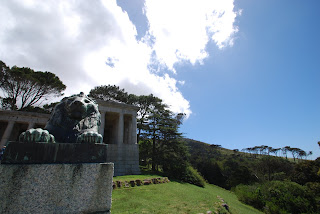
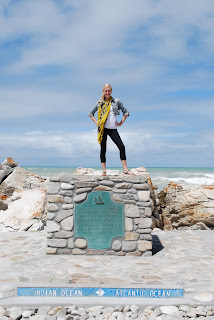
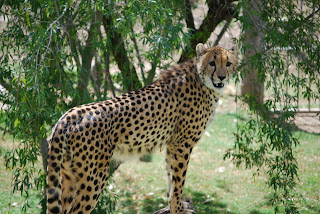
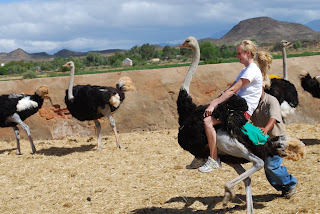
Its been nearly half a month since my last update....so sorry. I'd say I've been busy, but I really haven't. Its been pretty laid back here in Cape Town, therefore not much to report.




19 days until Minnesota.
333KEC


 Have a loverly day :)


We stayed on an island called Chiefs Island. It is the biggest in the delta, and is home to a majority of the wildlife. After arriving, we set up our tents and just relaxed…waiting for the sun to dip and the temperature to lower to below 80. Once it did we set out on our first walking safari of the visit.


…


In the morning of day 6 we took a game drive through Chobe National Park, which was the biggest natural high I have ever experienced. Not only did we see the typical animals we had seen in the Delta and on the river, but we were extremely lucky to see 2 lions in their natural land.





Finally, the last half-day of our trip I crossed the border into Zimbabwe and tried my best as bartering with the locals. Honestly I think I did pretty well! For example, I bought a lion’s tooth for 2 tampons, an empty water bottle, a cloth headband, and 20 Rand (about $2.50).


During Apartheid thousands of Coloureds and Blacks were forcibly removed from their homes and relocated to townships surrounding Cape Town. The most famous case of relocation, includes the stories of those that were removed from the beautiful coastal city of Simonstown, which was declared “White-only” at the beginning of Apartheid. The coloureds who lived, went to school, and had made their homes in Simonstown were sent letters notifying them that they were to leave the city by the end of the month. They were to move to Oceanview. Despite the name, Oceanview has no view of the ocean. In fact it is located in the valley of the mountains…basically desert.
This is where I spent my weekend home stay. Oceanview.
Friday night, us 117 American students arrived at Oceanview HS with our bags packed, ready for a weekend with another family. As the bus pulled into the dirt parking lot, my stomach turned with nerves. I knew that the crime rates were higher in Oceanview, the families had been through struggles, and most likely I would feel incredibly uncomfortable throughout my entire stay.
As I entered the school gymnasium and reached my designated table, I was greeted by an older couple, Lucy and Clive. First impressions: Clive was quiet and Lucy had a moustache. Ha. Also, to me, Lucy was white. Not coloured. I was confused after expecting to live with a dark-skinned family for the weekend.
We were shortly joined by Mary, the girl I stayed with in the hotel, and I felt much better that I would be with an American that I knew and liked.
As we ate dinner, there was very little small talk that occurred between our new “parents” and us. I watched as the woman across from me ate entirely with her fingers. I tried not to cringe as she licked each one after the meal, hoping that it would be over quickly. In fact I remember hoping the entire weekend would be over quickly. I just wanted to go back to my UCT dorm, however crappy it was, and live my life.
We left the school, climbed into a small car, and headed to our new temporary house. It was small, like I had expected. However, it was extremely homey, which I had not. When we first entered, we were bombarded with pictures of Lucy and Clive’s 2 daughters and 5 grandchildren. The smiles beaming from all corners, made the small house feel like a home. We went through them one by one, learning of each person’s stories.
The most interesting, of course, was the oldest grandson who was almost completely blind. Lucy explained that he was 100% blind in one eye, and 80% in the other. The picture that was on their wall was one of complete joy. Pedro, the boy, looked so gleeful during what was clearly a professional photoshoot. His smile was huge, mouth half-open laughing, and his eyes in two separate directions due to his disability. The image almost contradicted itself. It depicted such happiness, but clearly shows the problems he faces everyday.
Our first night with the couple was spent at their friend’s house, who also hosted American students. Each and every person at the house was incredibly friendly, offering snack after snack, and drink after drink. By the end of the night, everyone was on their feet dancing to some sort of techno-like music. We fit nearly a dozen and a half people into one small lounge…some dancing on the couch or table….all of the American girls with a baby or toddler in their arms. What a cultural experience. A family experience.
Again, as I have seen time and time again in this country, the people may be living through incredible struggles, but they are always happy, appreciative, and willing to reach out to anyone else in need.
…
The next morning, after Lucy and Clive insisted that we slept in, we heard story after story over a wonderful breakfast. Lucy was so full of experiences that she was never afraid to share with Mary and me. The most interesting story that we heard was that of an Austrian man that Lucy and Clive had taken into their home about 3 years back. Lucy explained his story as one of a successful businessman who lost everything to alcoholism. After slowing falling apart, as well as having most of his belongings and money stolen by his past housemates, he came to know Lucy and Clive who took him into their home…without hesitation.
Shortly after he arrived, however, he became extremely ill and was unable to leave his bed. Lucy, despite having a still-shattered ankle from an accident, and Clive, who can no longer work due to severe back problems, took care of the man. They would carry him from bed to the bath, and back. Fed him. Read to him. Everything.
When the illness reached it worse, Lucy explained that he could no longer reach the bathroom in time, so she would continually have to clean him in bed. The man, however, was so embarrassed that he would take the clothes (after dirtying them) and hide them in his room so Lucy or Clive wouldn’t find them. You can just imagine the smell.
In the end, sadly, he passed away due to the illness in their house. Actually, he passed away in the bed that Mary and I slept in for the weekend – It was a little uncomfortable falling asleep that night.
…
In the morning on Saturday we went to volunteer with Lucy at the soup kitchen. I actually spent more time taking pictures than serving soup (they didn’t need me I promise!). The rest of our Saturday afternoon was a combination of stories and meeting their children/grandchildren. We also made a quick trip to the beach.
On Saturday night I attended church with our new “parents”. It was quite the experience to be part of a Catholic service, surrounded by coloureds and blacks. Of course I haven’t had a lot of experiences with religious services...but I do think that those who were with me made it the unique experience it was. The thought of originally going, when Lucy asked, made me uncomfortable. However, as most things are, it was worth my time.
…
Sunday. Our last day with the old couple.
For lunch, their youngest daughter came over with her family. Her two sons, Pedro and Kerran were absolutely wonderful. Pedro, the blind grandchild, was 12, while Kerran was just over 1 year. Now, I’m sure it sounds unrealistic, but had I not been told Pedro was blind I would have never noticed. I found myself continually impressed by the normalness of his life. He played cards, took care of his little brother, helped Clive with the Braai pit (Barbeque), etc. Only once did he mention that he couldn’t do something because of his disability. His mother responded, “Pedro you are fine. If you can’t see then just feel.” Never once did his parents or grandparents treat him as anything but a normal 12 year old boy.
During our last hour with the entire family, I showed Pedro my camera and he ended up taking some wonderful pictures. A blind child took beautiful pictures. Sounds astonishing doesn’t it?
…
After an entire weekend hearing about Lucy and Clive’s recent life, Mary and I finally felt comfortable to ask about their experiences through the Apartheid. Mary and I initially asked how old they were when the segregation started…of course the answer wasn’t just a number, but a long story and trip to Simonstown.
They first explained that they had both grown up in Simonstown, just down the street from each other. Lucy said that she and Clive had been friends from the age of 8.
“He was 8 and I was 7. He was the first person to ask me to play with him after I moved into town. I should have know then that it was love,” she said with the cutest smile on her face. Clive just held her hand and smiled too.
When they were both around the age of 16, their parents received the inevitable letter that they were to leave their homes and move to Oceanview. Clive explained that at the time, Oceanview was even more of a desert. “When the wind blew you couldn’t see anything…it was just sand everywhere,” he described as we drove through the Township.
Once the stories became more in-depth, we loaded into the car and headed to Simonstown. We drove the old streets and were shown both the houses they grew up in, and eventually had to leave behind. Lucy told us how there was no time to pack, and especially to sell the house to make money. It happened too quickly to really do anything.
…
The one story that will always stay with me from my visit was one from Lucy’s childhood. She always told us that after school she and her best friend, a white girl, would go to her friend’s house and eat peanut butter sandwiches. In fact, she showed us the house, and the step, where they used to sit to eat.
I asked, as we walked passed, what had happened to that family during the segregation. Did they realize what was happening? How did the white families react to their neighbors being forced to leave?
She responded simply. “They wanted us out.”
…
Prior to visiting Oceanview, Apartheid seemed like such a foreign concept. It was a terrible thing that occurred many many years ago, that is no longer remembered or acknowledged.
After visiting Oceanview, and developing a second family that personally experienced, and is continuing to experience, the affects of the segregation and racism, I can feel how real and current the Apartheid is.
…
I am really looking forward to the many weekends I will go back to visit Lucy and Clive. I promised that I would bring my mom over for dinner when she visits, and I can’t wait for her to meet them, and hear their stories.
For all of you: do something that will make you nervous…and change your life.
333KEC
]]>To all of you out there… remember where you come from, and appreciate the diversity of the world around you . Goodness knows I am.
Not much has happened since my last update on Friday. I’ve slept a whole lot, and done very minimal homework which adds up to a very nice weekend.
On Saturday I went to the South Africa v. Australia rugby game with CIEE, my program. It was quite the experience. First and foremost, I think its important to mention that I have never seen a rugby game before in my life, nor do I know the rules, positions, anything. However, despite all this, I had a great time!
Our tickets were in the standing section, which at first seemed like it was going to be terrible. An hour+ of standing to watch a game I didn’t understand? No, thank you. However, I quickly learned that this is where all of the extremely dedicated fans are that can’t afford the seated tickets.
Now all Americans, at some point in their lives, have been to a football or baseball game. There are those crazy people that get all dressed up, face paint, hair, everything. There’s yelling, standing, jumping, lots of energy.
Well…the rugby games here in SAfrica are SO. much. more. I have never experienced such energy in one location in my entire life. The closet thing that I could imagine is the scene in Harry Potter 4 when you first get a view of the Quiddich stadium. Every single fan, from the 5 year old little girl to the 90 year old man was dressed from head to toe in green Springbokke jerseys, carrying SAafrican flags and yelling at the top of their lungs. It truly was an experience that showed me how easily people can rally around a loved team.
Also like in HP, even miles away from the stadium the fans can be seen. On our multiple mile walk to and from the stadium, the green jersey’s dotted the paths and restaurants. All of the cafes and shops had their doors open and were yelling “GOOOOOO BOKKESSSSS” as we would walk by. If even one Australian was seen on the streets, the look on their face was terror. I felt scared for their lives if they were caught by a group of Bokke fans.
Until tomorrow,
333KEC
]]>Following yesterdays post, and reflection on my lack on independence, right now I am currently sitting at a local cafe called “Cocoa Wah Wah”. I brought extra homework with me to campus, and after my only class ended at 12:45p I headed down into Rondebosch — the town located at the base of the mountain — and found a comfy spot to work. It exactly what I needed, and easily reminds me of my adventures into DC.
It is a little different considering a whole swarm of Americans showed up right after I got here…and tried to be social…basically interrupting my alone time. However, they have now left and I’m once again by myself. Just me and my coffee.
I had an interesting experience this morning on the shuttle. When I caught it at the dorm to head to campus, I realized that I was the only white person of the 45 passengers and driver. The interesting part…it didn’t bother me at all, and no one else looked at me as if I was out of the ordinary.
That’s just how it has become here in Cape Town. I’m always the minority, and no one else thinks anything of it.
Had I been riding the metro into Anacostia in DC, being the only white person on a train, I would have been scared, and probably gotten off at the nearest stop. In fact that did happen to my friend Nick and I once, and the man sitting behind us leaned forward and whispered “You should get off here, its the stadium, you’ll be safe. I suggest you head back in the other direction”. Ha. Woah. I’ll never forget that day.
But, alas, Cape Town is different. I’m not suggesting by any means that its safer than Anacostia. They are probably about the same. However, more often than not, I am the minority. My dorm for example is all black students except for us Americans. And thats just how it is. No one even gives it a second thought.
…
On a completely different note, I don’t have class on Monday due to a national holiday: National Women’s Day. How awesome is Africa?! My friend Gretchen said “We should have a party in honor of ourselves!” I think we’re going to.
Well, I should probably get some work done. Its a beautiful afternoon outside. About 70 and sunny. I’ve got my coffee and some fabulously interesting photography readings to do. Can’t wait.
Until tomorrow,
333KEC
]]>There are many things here in Cape Town that I have taken a while to adjust to. However, one thing that I don’t think I’ll ever get used to is my lack of independence.
Because there are such high crime rates in the city, it is incredibly dangerous for anyone, man or woman, to go outside alone, especially at night. There are certain times throughout the day where it is safe to walk into town for groceries, etc. But on the whole, most of my time is spent in a group, running errands for everyone.
This has become so difficult for me. Some of my favorite memories of being in Plymouth and especially DC are days where I would just travel into the city, find a caribou, and just be alone. It sounds so sad, but I find that it is necessary to gather my thoughts, deal with stress in my life, or simply to get work done. I have never understood friends who are always together and lack independence completely.
Now that I’m here, and unable to find time to myself, I have attempted to find other ways to achieve these things. It is safe to be alone on campus, however my time between classes is usually spent eating lunch, or running administrative errands between buildings. Not a lot of extra minutes can be found to stop, sit, and gather my thoughts. And when I finally find that time, someone always finds me. Its hard to be alone with other people.
Another problem I have found is that many people here see my independence as insulting. Why don’t I want to hang out with them? Many people can’t seem to understand why I would much rather stay in on a Friday night and watch a movie by myself than go out to a club with a group. They always ask if I’m ok…depressed…sad. None of the above. I just need a little bit of Kristen time.
In fact, just today I was called a “loser” because I said I had a great night watching 13 Days, drinking hot chocolate, and going to bed early. Sorry, but I’d much rather do that on a Wednesday night than go out and get hit on by creepy men. If that makes me a loser, so be it. Ha. (Not to mention, my friends are constantly complaining about how much money they spend…maybe if they didn’t go out 5 nights a week they’d have more money for groceries.)
It is of course nice to have my own room. I usually come home and just shut the door and get my homework done. But more than anything, I wish I could hop in a cab and find a cool coffee place that would be safe. I have found that the most interesting parts of cities can be found in tiny, cramped, coffee shops. The people I have met in the Caribou’s of DC are always a joy.
I guess, like everything else, I’ll adapt. But for now it’s a struggle.
Until tomorrow,
333KEC
]]>This weekend was quite eventful, packed with a series of events only doable in Cape Town.
After the first week of classes I can safely say I am extremely happy with my professors and the topics I’m studying. For the first time in my schooling I am excited to go home and do my reading, because I know it will be extremely interesting. Even more so, my Ethics class is one that continually keeps me thinking. My professor is so intriguing that his points in class easily apply to my daily life. Even the readings, which are surprisingly short and interesting, can fit into my routine. Ethics is just a fascinating topic, and I hope to continue reading and studying it.
My photography class is also applicable, considering I took over 700 pictures this weekend alone. After studying so many different pictures in just one week, I can use what I’ve learned to improve my own photography.
…
On Saturday the entire CIEE program went wine-tasting about an hour outside of Cape Town. Now, there were a few mixed reactions to the event. I was looking forward to finally understanding the process of wine, learning what I liked and didn’t like, etc. Others in the program were looking forward to getting drunk and not having to pay for it.
We got a personalized tour through the vineyards and winery from the daughter of the owner. She gave us an outline of the how the grapes are planted, harvested, and fermented to create different types of wine. The scenery around the vineyards was breathtaking, with vines as far as the eye could see, with a horizon of the Cape Mountains. Even with my wonderful camera, it was too massive and incredible to capture.
The vineyard that we went to, Nelsons Creek, was unique in its operations. It was explained that the original owner would sell different pieces of land to his black workers, and allow them to determine where the wine they harvested was sold. This land was the first to be own by blacks in the area, and although the profits were not as grand as they could be (the blacks lacked marketing or business education) the wine itself was abnormally incredible because the blacks were experts in the land, harvestation, and the process in general. This is the reason Nelson allowed for them to each individually run their part. The result was unique and remarkable wine.
There were a couple of dogs at the winery that continually begged for food during our lunch. It made me miss Juno. Overall, however, it was a great experience.
Yesterday, Sunday, a smaller group of 8 of us went sand boarding down dunes about an hour away from Cape Town.
Now my initial impression of sand boarding was that it was going to be extremely similar to wake boarding, or snow boarding. I am terrible at both of those things. And, of course, I was pretty bad at sand boarding. That doesn’t mean, however, that I didn’t have any fun.
As we arrive at the dunes after being picked up by the tourist organization, the scenery was pretty bleak. It didn’t seem like we’d be boarding on any major dunes that you picture in “typical” Africa. We had seen a little bit of sand in the distance as we drove in, but only about 10 feet of it. I think we all were slightly disappointed.
When we finally parked and were issued our board and helmets, there was barely any sand in sight; Just a simple path that twisted off from the dirt parking lot. We started walking.
We reached the top of small hill nearby and were struck by mountains of sand. It was pure white and stretched completely into the horizon. There were sand buggies and four-wheelers flying by, clearly having a blast cruising over and around the massive dunes. Seeing the drivers reminded me of two things: 1) my brother who would love to drive fast in a rally car around the dunes, and 2) the cab drivers in San Francisco who don’t even break when they go over the tops of the hills in that city. As a passenger you literally are lifted off your seat as you sail over the top and head downward.
The group set up “camp” by a nearby bush, and began our basic training. Our two guides were young and looked extremely sporty. They fit right into the scenery, with their outdoorsy outfits and dreadlocks.
Our safety talk went something like this:
“Ok so safety is extremely important out here. Make sure to keep your helmet on. Don’t get hit by anything. OK, that’s about it for the safety talk. Lets go!”
I ended up doing more photography than I did boarding. The most exhausting part was having to walk back up the dunes after boarding down. They weren’t that tall, however you were walking through feet of sand. Each foot would sink in as the other tried to keep climbing up. Meanwhile you are sweating with jeans on and dragging a wooden board behind you. Needless to say, my thighs and butt were a little sore when I woke up this morning.
Overall it was a once-in-a-lifetime experience that I think I’ll do again. So maybe it’ll become a twice-in-a-lifetime experience for me.
Today I had a typical day of class and homework. However, it is now only 8:30pm, and I’ve finished my work for the entire week. I think I’ll watch a movie.
333KEC
]]>Today was a day of mixed emotions.
I was up around 9 am to register for this semester’s classes, which proved to also follow the usual “Africa” time. Unlike in the United States, classes are not scheduled online, but instead through stacks of paperwork. There was line after line, or queue after queue, to fill in your classes, meet with advisors, type this, scan that….what a nightmare. Luckily, I got there early and didn’t have to wait all that long.
I guess even in “Africa time” it pays to be early.
That night, Celia, Jill, Gretchen and I decided to have a night out on Long Street, which has most of the safe clubs and bars. Now you would think that a night out would be wonderful, especially before we were to start classes today (on Monday). However, our trip downtown started on an extremely terrifying note.
As we were just entering the city, our cab suddenly started to slow down. We weren’t at a light, but up ahead there were about 6 homeless men in the middle of the street directing traffic into the far left lane. Our first impression was annoyance….that they were begging for money, or work. But as we passed the group, our attitude changed and within seconds all of us girls were in tears, covering our eyes.
On the street lay another homeless man, still. He had very clearly been hit by a car and was no longer living. His body rested in a pool of blood that stretched almost another 2 feet down the road. The worst part was that the car that hit him was nowhere to be found. It has just occurred to me now that he had been hit and left to die.
And there were his friends, who had lived with him, and begged with him for petty change, making sure that another car didn’t come and hit him again. I cannot imagine having to direct traffic around my friend’s dead body.
Although the remainder of the night was fun, each of us would stop and fall silent at intervals throughout the night. The British guys that we were with didn’t understand, but just one look between the four of us and we all recognized that our sleep that night would be filled with nightmares of what we witnessed.
…
Of course, life moves on.
…
During that night, as I mentioned, we ended up going “pub crawling” with 3 new friends, 1 from the UK and 2 from Cape Town. They were absolutely hilarious! At one point, after being joined by 2 more from the UK, I remember getting into a heated debate about the differences between the UK and the States.
First, please let me point out one interesting fact about the atmosphere before I describe the discussion. We were sitting in a bar in South Africa called the Dubliner…obviously an Irish themed place. We had snagged a hidden table in the far back corner, which basically had its own room with a curved booth surrounding the table. And the best part…there was a painting of the signing of the Declaration of Independence on the wall. America much? When I was the first to notice the picture…I probably would have been the only one to notice considering I was the only sober person of the bunch…I couldn’t help but laugh out loud. And, it only got better when we started to debate. How could they say America wasn’t awesome when the signing of our Declaration of Independence was posted right there?!
Henry, one of the funny “chaps” from the UK brought up his frustration with Microsoft Word, and how he didn’t think it was fair that it was designed for American English. Now, Henry, being from the UK, and very drunk, was extremely passionate about this problem. He went on and on about how the British created the language, and how we (Americans) were so stupid because we dropped the “u” in words, and made them change the setting in Word. Of course, after he was done with his rant I said “Henry, we invented the computer, created the Internet,and invented Microsoft Word. I think its only fair that we have it in our version of English!”
Meanwhile, Celia and Jill are chanting, “Bill Gates is an American! Bill Gates is an American!”
Saturday:
On Saturday we headed down to the Camps Bay area, which is located right on the beach. It was a beautiful day, with the sun shining and a slight breeze. I usually have a bad habit of misjudging the weather from my small dorm room window, so I ended up wearing jeans and boots to the beach….oops. Once I got my boots and socks off though, it was so refreshing to walk through the sand. The water reminded me of skiing on Memorial day…FREEZING. I tried to explain to our friend Omarie, who drove us to the beach, that I had skied in water that was about 40 degrees Fahrenheit. I am terrible at converting to Celsius, but I told him that was barely above freezing. His eyes just buldged! “That sounds terrible! Why would you do that?” “It’s tradition,” I explained.
He didn’t really seem to get it. However, he then proceeded to encourage me to walk into the ocean water, which must have been a few degrees colder. Hmm…
After the beach, we walked up and down the street, and looked through the small carts of handmade jewelry and other trinkets. I know my mom will love them when she comes to visit. We also drove along the coast until we reached the waterfront. It looks very similar to the waterfront at San Francisco, filled with hundreds of beautiful sailboats.
I wanted nothing more than to have my camera with me. As the sun was setting on the boats all of the colors just became brighter and even more beautiful. With their reflection off the water, splashing seals, and flocks of seagulls soaring above our heads, it really made for an enjoyable evening with friends.
Sunday:
Sunday was a day of errands. I thoroughly enjoyed my first morning of sleeping in. As I like to say, a truly “good morning” is one that you sleep through. I slept until 1pm that day, so it was a wonderful morning.
Once everyone was awake, we got a group together and headed to upper campus to find our classrooms for Monday. Because it was the day before classes, almost all of campus was empty…making it the perfect opportunity to take pictures.
Monday:
Monday was the typical first day of school. Except it didn’t really feel like the first day, considering I didn’t pick out my outfit the night before or worry about whether or not I should ask a question in the first lecture. Instead, I just sat back and took in the South African way of teaching.
My first class of the day, “History of Photography in South Africa: 1860-Present” is incredibly interesting. The professor sounds and looks like a young Sean Connery (everything he says sounds so beautiful) making it much easier to listen. Plus, the subject matter of the class, photography, is something that has recently become a passion of mine, so learning about how it has changed through the history of South Africa is perfect. Every week we also have guest photographers that come to class and teach us about their photography, as well as the things they’ve witnessed through their work.
My second class, “Third Word Politics” seemed interesting, however it only lasted about 10 minutes. Actually, probably more like 8 considering the Professor walked in late. She simply introduced herself, told us to pick up our readings at the department, and left. Huh. I guess I’ll get a better impression of that today at 2pm.
I just went to my first “Ethics” lecture, where the professor was wonderful. Even after just a few minutes, I was impressed with his ability to teach over 600 students as well as answer questions and stay on track. He even was able to throw in a sense humor while explaining the definition of ethics….always impressive.
]]>Today was a cold day. In fact, it was the first day where I actually experienced something that would compare to the winter we have back home in MN. Of course, it wasn’t extreme for me, but even bundled up in my Northface and thick scarf, I shivered walking to the shuttle this morning.
As part of our visit to Cape Town, all of the CIEE students have an opportunity to volunteer with one of the many organizations here in South Africa. Today we were given tours of three of the possible locations: A TB clinic, a school called the LEAP school, or a missionary-type community called The ARK.
Our first tour was of the TB clinic, which houses people of all ages who are infected with an extremely serious case of Tuberculosis. Many of the patients had a form of the disease that is resistant to over 90% of the usual drugs used to treat it, therefore their lives become consumed with tests, treatments, etc. As the bus first entered the gated area, my first impression was something like the prison seen in the movie “The Great Escape”. There were many small buildings, each with individual gates at the door, locked and kept closed at all times. Also, outside there were little clumps of men and women just sitting around in the cold weather. All of their clothes seemed to be mixed and matched, as if it was a free-for-all to gather whatever you could find. I remember seeing a hat on one patient that was clearly a set with the hat on another.
As we entered the first building, turning a corner into what was clearly a children’s playroom, the sound of screaming kids hit our small group instantly. Once we even got close to the door, they flooded out and started hugging our legs as if they had been waiting for a parent to come home after work.
The first little boy to run up to me had a bad foot which dragged behind him, and a hand that did the same. However, he was not going to let that stop him from having fun with us guests. He instantly grabbed my two hands in his, and started to jump up and down. Finally catching on, I would pull him up, lifting him high into the air on his up jumps, making sure that he didn’t go crashing to the floor when coming down. As I looked around, the room was filled jumping and soaring children. Then, along came another boy, even tinier, who also started jumping.
I have never felt such need to hold another human being in my life. I just wrapped him up in my arms, holding on and rocking back on forth. My smile was stretched across my face, as was his, as we instantly bonded. Of course there was no use in trying to talk, as none of the children spoke English. That is the closest I have ever felt to being a mother…holding a child that needs nothing more than love.
I was holding a boy who was almost guaranteed to die of Tuberculous. But that didn’t matter.
When it was announced that it was time to go, the young boy looked so sad. I of course couldn’t explain to him why we were brought together then separated less than 5 minutes later. His legs squeezed tighter around my middle, and his brown eyes will always stay with me.
It was clear that his boy, and all of the children, had been torn away from people they loved time and time again. Nothing hurts more than to know that I was just another one of those people.
---
Our second stop was at a school for children that focuses on Math and Science. Called the LEAP school, they have an extremely intense application process, and mainly accept students who are living in extreme poverty, without parents, etc. When first presented with the idea of working at a Math and Science school, I thought of my father, who supports the teaching of Math and Science – especially to girls – because of the decrease of students studying those topics.
During our tour our guide explained that our job, as volunteers, would be to work with a small group of students (grades 9th through 12th). Not only would we help with homework and school, but also develop a relationship with them. He explained that many volunteers become mentors to the students, and develop into friends that the students can talk to about other parts of their life. More than anything, students allow the volunteers into their personal lives – more so than the counselors at the school — and usually listen to the advice and experience of the older university-attending students.
I found the LEAP school to be an interesting idea, but the boy from the clinic still wrenched at my heart through the remainder of the tours.
--
Our final visit was to the ARK. This is an entire community that provides a home for small boys and girls, single mothers, entire families, and anyone else. They provide drug-reabilitation centers for anyone in need, free of charge, and encourage all residence to work throughout their stay.
I was caught off guard by the mood of the ARK. Of course, because Cape Town is warm throughout most of the year, all of the common areas for the residents are outside. Today, however, as I mentioned, it was extremely cold. As we walked through our tour, so many of the residence just sat outside for hours and hours. I think that must be the worst part of living in poverty — having nothing to fill your day, and instead just spending hours thinking about how terrible your situation is. But, just like all of the Africans I have met, these people were extremely happy and optimistic about their life.
One women — she appear to be in her 80′s — chuckled at us as we walked by and said “I’m the youngest one here!”
A sense of humor can really take you a long way.
I haven’t decided where I’ll be volunteering, or if I’ll be volunteering. Once I figure out my final class schedule, it will be easier to decide. However, I know that the little boy I met today will always be in the back of my mind.
I’ll never forget how he wrapped himself around me, looked into my eyes, and played with my hair.
That little boy influenced so much that I will do in the future, and he’ll never know it.
Until tomorrow,
333KEC
]]>Yesterday we got the chance to see the UCT campus. Incredible. Absolutely incredible. There is the main part of campus, where the view (in every single direction) is the most beautiful thing I’ve ever seen in my life. From the steps of the main building, I sat, looking down into the valley of Cape Town, surrounded by mountains. Behind me, I peer over the old, vine covered buildings, up at another mountain peak. I have never been so overwhelmed with beauty in my life. All I could think was how I wanted everyone in my life to witness the extravagance. Also, because I knew that was impossible, I worried about how I could possibly explain the beauty to those who haven’t seen it. I can’t. Without actually seeing it, it is unimaginable.
After sitting to appreciate the view, I experienced the biggest culture shock possible. As we went to lunch, we walked in to the cafe (indoors, with the doors propped open) there were multiple birds that were walking/flying around the tables. I could not believe it. All of the Americans I was with were SHOCKED to see the birds, and whispered about how unsanitary it was. Meanwhile, the native African and local students, didn’t even flinch as the birds flew over their table, and picked at the garbage on the floor. Again, I could not believe it. I guess different parts of the world have different norms. Even now, sitting with my South African friend Vongs, he says “that’s nothing to be concerned about”. Wow.
Then, for dinner we went to a native African restaurant and witness native african music, with drums and all. It was easily one of the happiest moments of my life. There are no words to describe the experience.
TODAY:
Today was another day that really showed me the differenced in cultures around the world.
We checked out of the hotel around 9am, and moved in our dorms, where we’ll be staying for the remainder of the visit. I am living with an American from Georgetown named Kevin, as well as two african students: Caroline (from Zimbabwe, which she simply calls “Zi”) as well as Oko. I havn’t met Oko yet, but apparently he is very quiet and isn’t home very often.
When I had my first introduction to Caroline, she told me that was her middle name. Her first name of course was very complicated, with multiple vowels. Lets just say, I’m very happy she goes by her middle name! That seems to be the case here with most of the Africans. Their names are very complicated, and it takes me at least 3 times asking for me to understand. I suppose that’s typical of different cultures, although Vongs did remark that the English names were “super easy to remember. They are all so typical”.
My two friends, Jill and Celia, seemed to have much more terrible experiences with their flats. They are both living with 3 guys, and both seem to be shocked at how old and filthy the dorms are. Of course, they are not very modern. I’ll be the first to admit that. But I guess I lucked out because mine is very clean, thanks to Caroline who is basically the only one who lives here. Also, I’ve gotten to know Kevin pretty well, and he seems like he’ll be a great flatmate.
The one shocking thing about my flat is that it doesn’t have a shower. Instead it only has a bath with a broken shower hose thing. I hate baths more than anything. I haven’t actually used it, but Kevin said it is terrible. Either scalding hot, or freezing cold, with barely any water pressure. Hmmm considering I’ve got a ton of hair, it should be quite the task to get it clean at least once in a while. I’ll keep you updated, but for now I figure after a few tries, I’ll get a process down.
After moving our stuff in, we went with our orientation leaders to a nearby “town” to get stuff and groceries. Now the interesting thing about Cape Town is that there is a difference between Cabs and Taxis. Now Cabs are the typical mode of transport, where you tell them a destination, and they take you there. However, Taxis are completely different. They are 15 passenger vans that travel up and down 1 road, honking and yelling for passengers. Because of this, all the major streets are constantly filled with the sound of “beeps” and “whistles” as the men inside try to gather customers.
So today, with our groceries, we climbed into one of these taxis and traveled to the end of the street (again, they just go up and down one street, for the cost of 5 Rands — less than $1). We fit a total of 18 people into the van with all of our groceries. It was quite the experience, and one I’ll never forget. Of course I’ll be taking another taxi, and many cabs while I’m here.


We’re going to see the penguins tomorrow! So expect pictures!
333KEC
]]>Minneapolis, Atlanta, Dakar, Cape Town.
I have never seen such beautiful people as those from Senegal. With skin that looks like dark silk, I couldn’t peel my eyes away as we refueled in their country. As we waited on the tarmac (unable to leave the plane unless Dakar was our final destination) I watched the unbelievably gorgeous workers of the Dakar airport go through their normal routine to secure the plane. I guess, at first impression, I was shocked by their look because I grew up in Suburbia Minnesota. Not a lot of mixed races in Plymouth, mainly limited to the Arians, few Asians, and a decent Somalian population downtown.
Even seeing the people who were sitting at E27 when I arrived in Atlanta, I learned quickly that this trip would be much more of a culture shock than I was anticipating. That’s why I’m doing it though, right?
Now, as I sit on my second 8-hour flight from Senegal to Cape Town, South Africa, I can’t quite find the right words to describe my expectations. The man sitting next to me happens to be a teacher at the University of Cape Town, so I appreciate the insight he offers to the structure, size and breakdown of class and the University as a whole. Although, I have to be honest, I’m clearly not making this trip for the structural education.
More importantly, I’m making this trip for the cultural education. Just peering out the tiny airplane window in Dakar, the site of small, worn buildings and scarce landscapes gave me more perspective than I could gain in a year of Plymouth.
As I write this post into a word document (to be posted when I find wireless) it is currently 11:25am in Cape Town, South Africa. Meanwhile it is 4:25am in Plymouth, Minnesota. I find myself somewhere in between — on more levels than just the time of day.
Until tomorrow,
333KEC
]]>